XBert's analytics and reporting suite gives you the firm-wide intelligence to make smarter decisions - every day.
Analytics and Reporting
XBert's analytics and reporting suite gives you the firm-wide intelligence to make smarter decisions - every day.
A suite of built-in BI reports covering capacity, profitability, client comparison, and team performance. No data scientist required.
The Pricing Connection
Data That Pays
for Itself
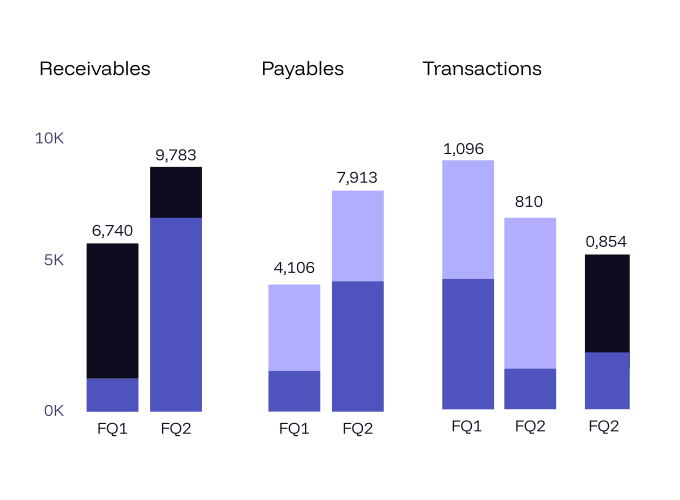
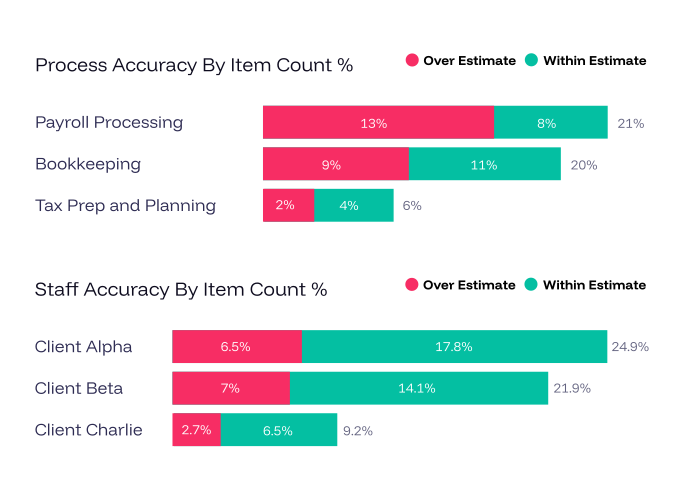
XBert's analytics don't just tell you how the firm is performing. They help you charge what your work is actually worth. Transaction volume data shows you which clients are more complex than you're billing for. Time estimate data shows you where margin is being lost.

For Practice Managers
The Data
your Firm Decisions Need
XBert's analytics give practice managers the visibility that was previously only available through expensive business intelligence tools - or gut feel. Make resourcing decisions, fee proposals, and client reviews all from the same dashboard.

Connect your clients during sign-up and discover the data that will help you scale - today!
Why do I need XBert analytics for my accounting firm?
Most accounting and bookkeeping firms are carrying more unmanaged work than they realise. Tasks that are started but not completed, time logged but not invoiced, clients whose complexity has outgrown their pricing, team members who are overloaded while others sit underutilised — this is work undermanagement, and it quietly erodes your revenue and margin every month. XBert's analytics are built specifically to surface this. Not just to report on what happened, but to show you what's slipping through — so you can act before the revenue is lost, before the team burns out, and before the client notices a problem.
What reports does XBert include for accounting and bookkeeping firms?
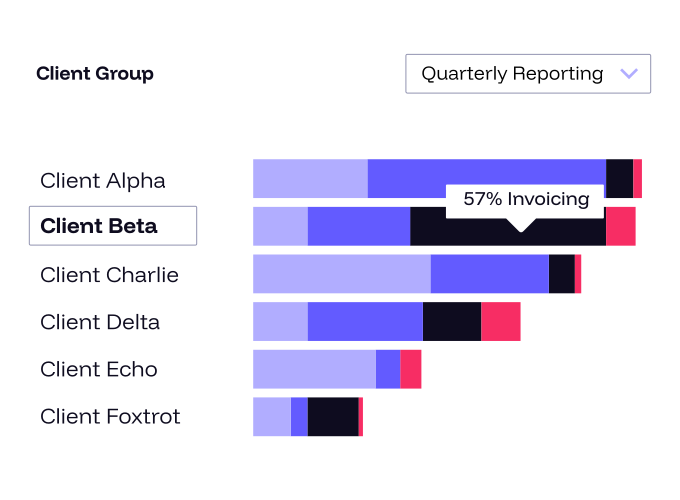
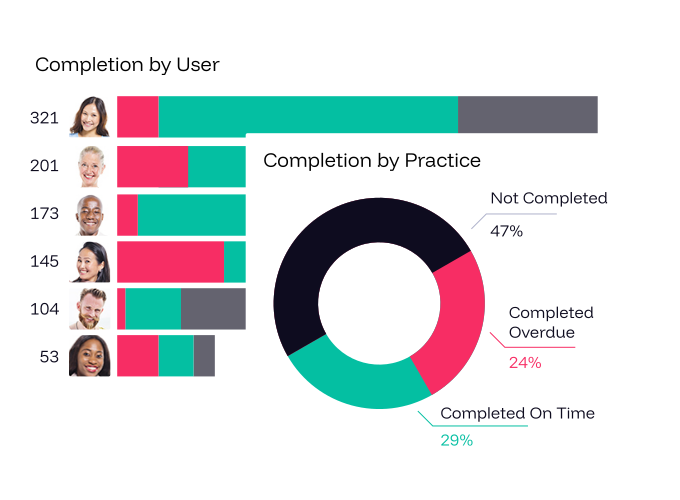
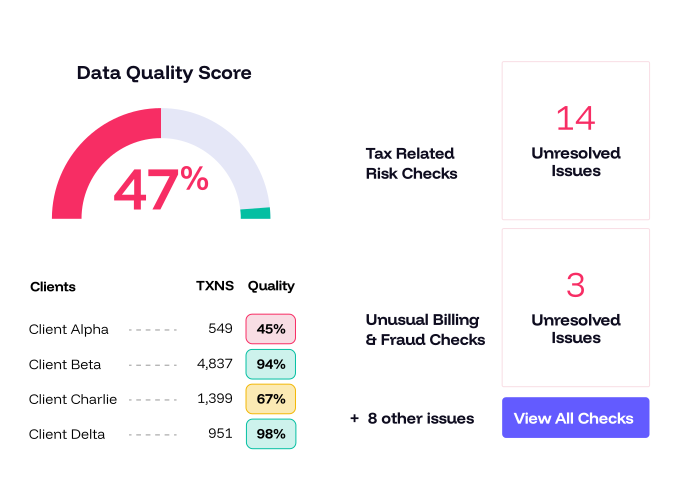
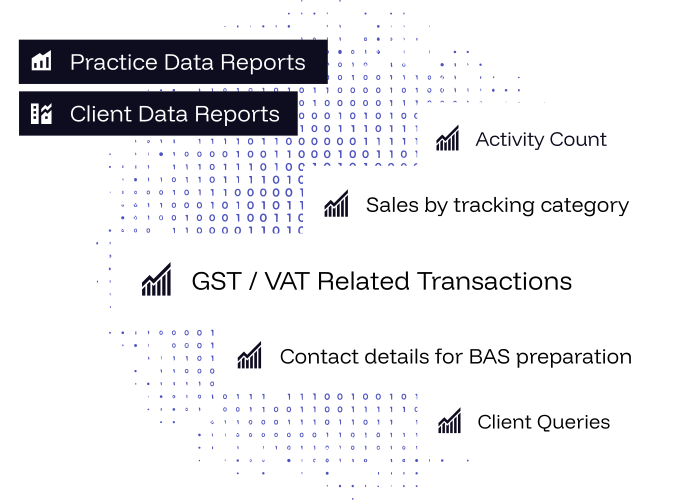
XBert includes 26+ built-in BI reports covering the full picture of firm performance: capacity vs actual hours (so you know who's overloaded and who has availability), client profitability (which clients generate margin and which consume more than they deliver), transaction volume trends (to identify clients whose complexity has outgrown their pricing), team performance and productivity, estimated time accuracy by staff member and process, client activity comparisons across your portfolio, GST and VAT detail reporting, data quality scores, and lodgement and deadline tracking. No data scientist required — everything is accessible directly inside XBert.
How does XBert analytics help with pricing conversations?
XBert's transaction volume data shows you exactly how complex each client's books have become — month over month. When a client's invoicing, payroll, or reconciliation volume has grown significantly since their last fee review, you can see it in the data before the conversation happens. Estimated time accuracy reports show you where time is being consistently over-run, giving you the evidence to reprice with confidence. As Ange Fisher CA of Clockworx puts it: 'XBert has fundamentally changed how we approach pricing. The ability to rely on real-time data has not only made our pricing more accurate but also more transparent.'
What is work undermanagement in accounting firms?
Work undermanagement is the gap between the work your firm is doing and the work your firm is actively tracking, completing on time, and billing accurately. It shows up as: tasks that fall through the gap between client email and workflow, time logged inconsistently or not at all, clients whose transaction volumes have grown but whose fees haven't, and team capacity that looks balanced on paper but masks individual overload. XBert's analytics are designed to close this gap — giving practice managers real-time visibility into exactly where work is being undermanaged before it affects profitability, team performance, or client delivery.
How does XBert's capacity reporting work?
XBert's capacity management reports show every team member's available hours against their actual logged time — updated in real time. Practice managers can see at a glance who is overloaded, who has capacity to take on more, and where work is stalled. Because capacity data in XBert is connected to actual task completion and time entries — not manual estimates — the numbers reflect reality. This is especially valuable for remote and part-time teams, where the natural office-based awareness of who's busy simply doesn't exist. As Emily Sinderberry of EJS Business Services notes: 'Because our team is mostly part-time, it is really important to see who's got too much or not enough.'
Are XBert's analytics reports accurate?
Yes — and the reason they're accurate is what sets them apart. Most firm performance reports are only as good as the data they're built on. If that data comes from manual exports or ledgers that haven't been properly checked, the reports aren't telling you the truth. XBert's reports are connected to live ledger data that has been continuously checked and cleaned by the AI layer running underneath. When the data is clean, the reports are trustworthy. And when the reports are trustworthy, your decisions on pricing, capacity, growth, and client strategy are made on solid ground.
How does XBert analytics help practice managers?
XBert gives practice managers the visibility that was previously only available through expensive standalone BI tools — or gut feel. From a single dashboard, you can make resourcing decisions (who has capacity, who needs support), run fee proposal conversations (backed by real transaction volume and time data), review client performance (which clients are profitable, which are at risk), and track team productivity (who's delivering, where support is needed). As the staging page states: XBert's analytics give practice managers the data their firm decisions need — without a data scientist.
What is the difference between XBert analytics and standard accounting reports?
Standard accounting reports (profit and loss, balance sheets, BAS summaries) report on your clients' financials. XBert analytics report on your firm's performance — your team, your capacity, your profitability by client, your workflow completion rates. XBert also connects practice performance data to live ledger intelligence — so you can see not just how your team is performing, but which client files are driving the most work, which are underpriced for their complexity, and which are at risk of missing compliance deadlines. It's practice intelligence that standard accounting software doesn't provide.